Dancing levitated diamonds in a modified Paul trap
The experiment
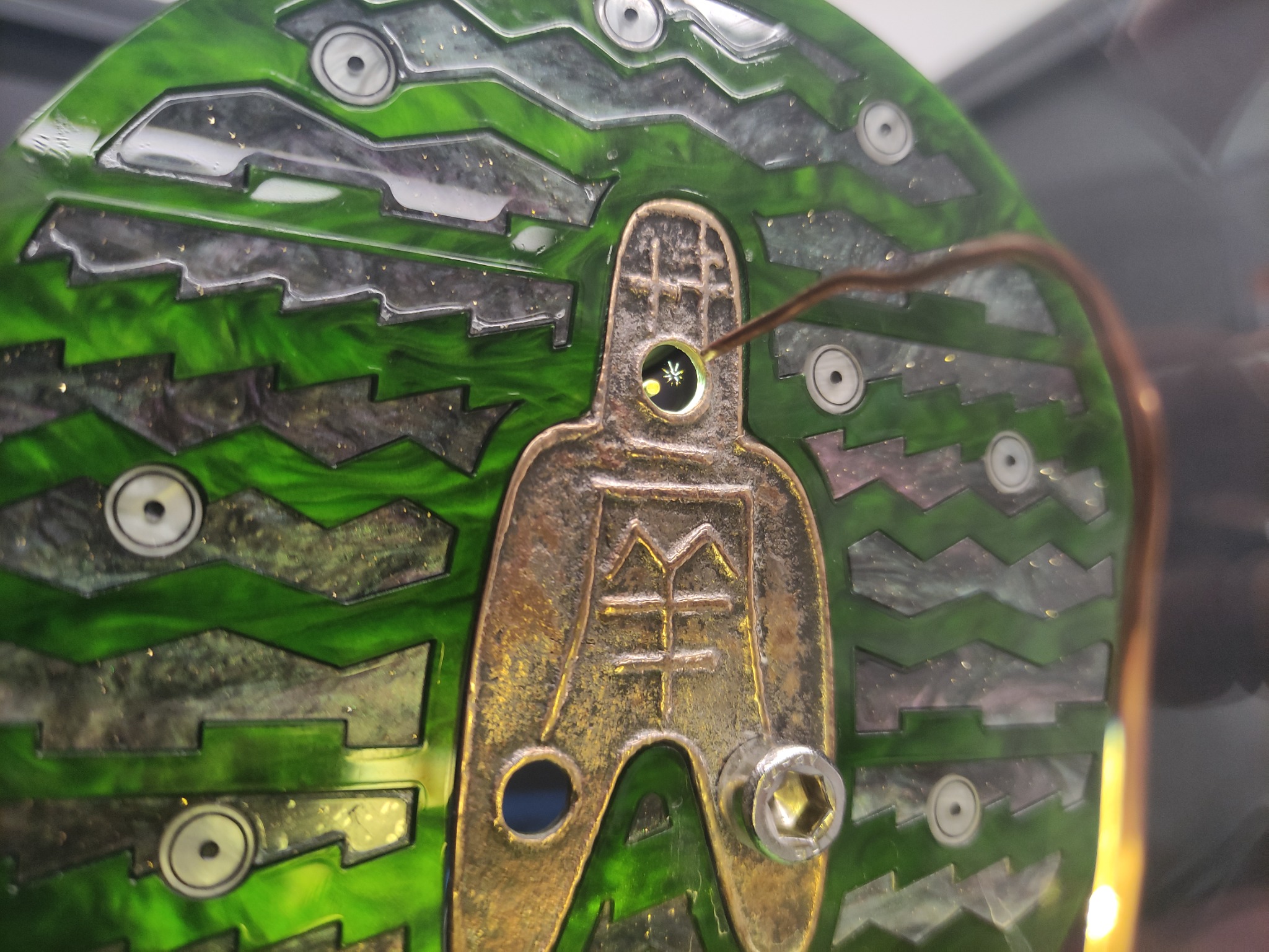
Paul traps use oscillating electric fields to confine charged particles. In this experiment, microscopic diamonds were charged by a high-voltage needle and loaded into a modified trap. They were initially stable, but over several hours their motion became larger and more erratic before they eventually escaped.
The behaviour was first noticed while the apparatus was part of a public installation at Science Gallery London. My project focused on characterising this gradual instability and investigating its possible physical causes. The experimental work involved challenging particle loading, high-voltage electrodes and a modified trap geometry.
assets/images/levitated/setup.jpg
Tracking the particles
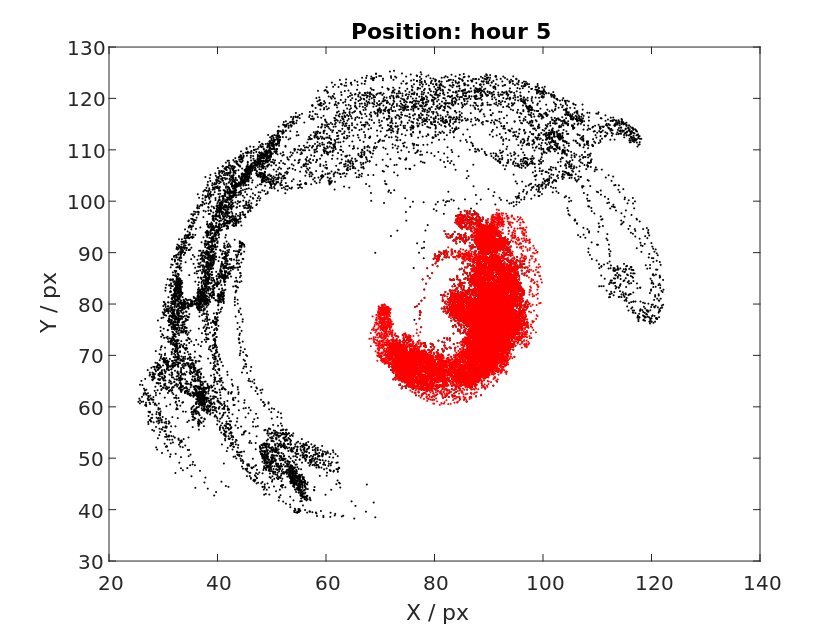
I developed MATLAB software to follow the particles frame by frame, repeatedly recentering a small analysis window so that fast motion did not cause the tracker to lose them. The reconstructed trajectories showed tight confinement shortly after loading and much wider, slowly rotating motion roughly five hours later—the “dancing” behaviour that gave the project its name.
assets/images/levitated/particle-trajectories.png
A possible loss of charge
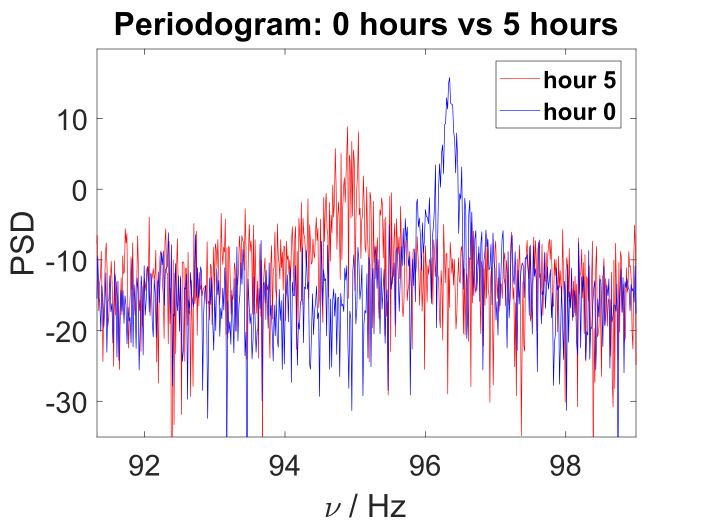
Power spectral analysis revealed a gradual decrease in the frequency of the particles' motion. A simplified Paul-trap simulation reproduced the direction of this shift when the particle's charge-to-mass ratio was reduced.
This suggests that gradual charge loss could have contributed to the observed instability. However, because the particle charge was not measured directly, the explanation remains tentative.
assets/images/levitated/power-spectrum.png
This work was carried out through a King’s Undergraduate Research Fellowship with Professor James Millen in the Levitated Nanophysics Group.